School security is not a single program, guideline, or device. It is a society, built everyday, that instructs pupils how to respond when regular breaks. A properly designed first aid course woven right into the school year offers youths useful skills, calm under stress, and a sense of company. When a student acknowledges the indications of a bronchial asthma strike on the playground, or a schoolmate collapses throughout setting up, the ideal response in the first 3 minutes commonly determines the end result. The distinction in between panic and purposeful action is training.
I have actually aided colleges turn out first aid training throughout year levels, from short workshops in Year 5 to recognized CPR courses for older teenagers. The colleges that see enduring impact reward first aid as a skillset and a state of mind. They make use of age-appropriate circumstances, freshen skills on a regular basis, and link the finding out back to the locations where cases occur most, like sports fields, science laboratories, stairwells, cooking areas, and car parks during pickup. The remainder of this piece distills those lessons into what to teach, how to show it, and exactly how to maintain it without straining personnel or budgets.
What pupils in fact encounter on campus
The saying is a hypothetical catastrophe. Genuine institution cases are normal and regular. Over a common year in a big high school, you will certainly see minor cuts, strains, nosebleeds, moderate allergic reactions, fainting, warm tension on cozy days, and periodic head knocks throughout sporting activity. Main institutions include play area drops and choking on small snacks. Uncommon however high-stakes events include extreme asthma attacks, anaphylaxis, seizures, and unexpected heart attack. The numbers vary by area and climate, yet patterns are consistent: 1 or 2 significant cases per term, lots of small injuries, and many moments where early assistance protects against escalation.
A student-focused first aid course need to mirror this profile. Teach the fundamentals that apply to everything: analyzing threat, calling for help, and providing standard treatment without making injuries even worse. Then lean into high-frequency scenarios and the few time-critical ones where mins matter, such as CPR, choking, and anaphylaxis.
Building an educational program that fits the school week
The most successful programs start decently and broaden. As opposed to a one-off event, prepare an organized method that matches cognitive development and comfort levels. For Years 3 to 6, create short, hands-on sessions that emphasize staying secure, looking for adult aid, and basic first aid like cleaning a scrape. For very early additional, present organized steps and decision-making. For elderly trainees, consist of approved first aid and CPR training that can lead to a first aid certificate acknowledged past school.
A practical model blends three elements. Initially, a yearly core session for every year degree that covers the fundamentals and a couple of age-appropriate scenarios. Second, integration points across the educational program, like exercising recovery placement in wellness class or computing compression rates in a math workout as an interest hook. Third, expansion chances, such as a first aid club, peer assistance teams at sporting activities occasions, or a cpr refresher course for pupil leaders midyear.
Age-appropriate web content by stage
Students remember what they do with their hands more than what they listen to. Each phase must supply easy steps, technique on tools or peers, and representation on when not to intervene.
Early primary: focus on security policies, staying calm, and calling for aid. Provide language: "Examine if it is risk-free, obtain an adult, call 000 or 911." They can learn to stop bleeding with pressure making use of a clean fabric, to sit a lightheaded good friend down, and to tell an adult if somebody is having problem breathing. At this age, you do not show CPR compressions at deepness, however you can present the rhythm using a soft toy and a metronome set near 100 to 120 beats per minute.
Upper primary: include choking reaction for self and others, easy nosebleed treatment, standard injury cleansing, and exactly how to talk with emergency dispatch with clear location information. Role-play assists, as an example, exercising just how to route an ambulance to the side gate near the gym.
Lower additional: educate organized analysis with the DRSABC or comparable sequence, utilizing plain language and repetition until it is automated. This is where you present sensible CPR training with full-sized manikins, AED awareness, recognition of asthma and anaphylaxis, and the recovery position. Consist of components appropriate to science laboratories and sporting activities. Pupils ought to practice calling an ambulance, placing an AED, and supplying compressions for two mins while a companion counts aloud.

Upper additional: cover a complete first aid and cpr course that satisfies national criteria, including CPR, choking, bleeding control, shock, cracks, sprains, back safety measures, seizures, diabetes-related emergency situations, warm tension, and ecological injuries. If the territory enables, students can finish an accredited first aid course and get a first aid certificate that continues to be valid for a defined duration. For those in leadership functions like residence captains or sporting activities captains, provide a cpr correspondence course each year.
Choosing a provider without the marketing fog
The market for first aid courses is crowded. A couple of concerns cut through the sound. Ask whether the educational program lines up with your country's resuscitation council guidelines and whether their cpr training uses feedback-equipped manikins that determine depth, rate, and recoil. For anaphylaxis and bronchial asthma, try to find circumstance training with fitness instructor adrenaline auto-injectors and spacer tools. If they promise certification, verify the releasing body and the money of the qualification.
Experienced service providers will readjust material to your event profile and facilities. If your college runs outside education and learning, they can include warm illness and snakebite protocols pertinent to your region. If you have a huge songs or dramatization program, they can simulate managing a passing out episode backstage where lighting and crowd flow are variables. In my experience, instructors that have actually operated in institutions bring different power: they manage rooms of young adults, equilibrium roughness and confidence, and keep examples grounded without frightening students.
Some institutions prefer a combined model: generate first aid pro fitness instructors for the core CPR course and qualification, after that have staff supply shorter refreshers utilizing the supplier's products. This conserves expense and builds internal capacity.
Integrating CPR and AED use without fear
Cardiac apprehension in school-age children is rare, however it takes place, regularly in teenagers and often linked to undiagnosed problems or exertion. The goal is not to scare trainees, however to normalize decisive action. A good cpr course strips it down. Check action, call for help, start compressions set, send someone for the AED. Pupils method switching duties every 2 minutes to reduce exhaustion. In schools with an AED, consist of a stroll to the system, opening up the cabinet alarm system, switching on the gadget, and adhering to the voice prompts on an instructor unit. That easy experience decreases hesitation if ever needed.
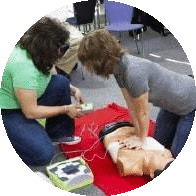
Schools often bother with obligation. Many areas have Do-gooder defenses, and AEDs are created to shock only when suggested. Highlight that doing something is generally far better than not doing anything, and that compressions and defibrillation in the very first minutes can double or three-way survival. When the regulation or plan enables, make AED places noticeable on school maps and educate student office aides and sports captains to get the tool quickly.
Making technique real with scenarios
The biggest change in pupil self-confidence comes not from slides, yet from circumstances that seem like college. Use places and times they acknowledge: a lunch soccer game, a Year 10 chemistry useful, a bus line in the rainfall. Run short, turning stations, three to 5 mins each, with clear goals. One terminal might be a nosebleed in a corridor. One more might be a rolled ankle joint on the stairs. One more, a bronchial asthma flare throughout cross-country training. Keep the debriefs crisp: what went well, what would certainly you do in different ways, that else need to be informed.
In elderly years, include complexity. Combine crowd management with care, like assisting a fainted trainee in a cramped assembly aisle. Or exercise triaging two events, a sprain and a head knock, choosing who requires urgent attention and who can wait. Pupils discover synergy normally: one telephone calls, one conveniences, one obtains supplies, one lists details.
Equipment, areas, and the small information that matter
Training experiences when pupils can not obtain their hands on equipment. For a year group of 150, aim for at least one grown-up manikin per eight to 10 pupils during cpr training. Responses tools are worth the service: pupils see green lights when they struck deepness and keep price, and their stance boosts within a session. Have one AED trainer per 15 to 20 pupils. For anaphylaxis practice, carry at least two instructor auto-injectors per group so every person cycles with the muscle mass memory of removing the cap, pressing firmly, and counting.
On school, map and tag first aid packages, AEDs, and spare inhalers if plan enables. Put kits where injuries happen: gym, oval, technology room, science laboratories, kitchen areas, and primary office. Supply them for the likely occasions: saline, gloves, triangular plasters, sticky dressings, instantaneous ice bags, and pressure plasters for snakebite if relevant. Refresh supplies every term and after significant events.
The various other small information is time. Reserve rooms with sufficient area to kneel beside manikins, and avoid carpeting that will elevate rubbing on knees throughout two-minute cycles. Location water and air flow near practice areas, considering that compressions get sweaty quickly. Stagger sessions to stop crowding outdoors rooms when a class transition happens.
Teacher roles, training, and plan alignment
Teachers do not need to end up being paramedics, but they do need confidence in their duty. Run a staff-first session before the student rollout. It calms nerves, aligns language, and exposes logistical concerns. Offer a quick-reference card or application link with the college's emergency situation procedures and regional ambulance number, and settle on radio or phone channels. When personnel monitor trainee technique, brief them on observing strategy without shaming. Students will certainly push also soft, lean on the breast, or neglect to let it recoil. Gentle adjustment and rep fix most errors in 10 minutes.

Match the trainee program to your policies on drug, head injury, and go back to play. If a trainee hits their head, that calls home, that documents the monitoring, and what is the default pause? If an EpiPen is utilized, what is the handover procedure when paramedics show up? Create it down in simple language that pupils and personnel share. The most effective programs strengthen the idea that assistance escalates: peer support for first aid, staff leadership for decisions, and professional care beyond that.
Working with parents and the larger community
Parents sustain programs they comprehend. A short note home before training helps: what trainees will find out, that they may exercise compressions on a manikin, and that no visuals web content is used. Offer an evening presentation annually for families. Welcome your provider to run a small session, reveal the AED area, and address concerns concerning allergic reactions, asthma, and sports security. The tone ought to be practical and calm.
Leverage local know-how. Some institutions welcome a neighborhood registered nurse, an ambulance officer, or a sporting activities instructor to sign up with the session on heat stress in advance of summer season carnivals. If your location has a browse life saving club or similar, collaborate for water safety and security components that get in touch with first aid and cpr.
Measuring impact without sinking in data
You do not require a thesis to understand if training jobs. Track a couple of signs each term. Note time to first aid feedback in simulated drills and at actual events. Videotape the variety of pupils joining cpr courses and first aid courses, and how many complete a first aid certificate. Survey self-reported self-confidence with a five-point range before and after sessions. Try to find patterns in incident reports: less rises, much better summaries of events, quicker activation of emergency situation solutions when warranted.
One college I collaborated with saw a decrease in sports-day ambulance transports over 2 years, not due to the fact that injuries disappeared, yet because early air conditioning, hydration, and far better triage lowered the number that required immediate care. One more recorded much faster action to anaphylaxis cases after every student practiced the auto-injector sequence and understood where spares were kept.
Handling delicate circumstances and edge cases
A trainee that recently shed a member of the family to a heart event may locate CPR method facing. Offer opt-in paths. Let students march, observe, or return when all set. Deal a silent edge for those that require a break. Similarly, consider cultural level of sensitivities when practicing touch-based techniques. Clear interaction and opt-out options maintain respect without thinning down the training.
Students with specials needs need to be consisted of with thoughtful adaptation. A trainee that makes use of a mobility device can still lead the scene evaluation, call for assistance, and train a partner on compressions. For pupils with minimal hand strength, they can exercise AED steps and scene leadership. Addition builds an extra reasonable group dynamic.
Refreshers, retention, and what fades first
Skills degeneration promptly without practice. Compressions shed depth, steps blur, and confidence decreases. Strategy light-touch refresher courses. The most basic technique is a five-minute CPR terminal in homeroom once a term. Rotate a manikin through class with a short challenge: 2 minutes of compressions at the appropriate price with responses lights. For several years 12 pupils who completed a cpr course previously in the year, run a cpr correspondence course prior to tests when routines get irregular. For anaphylaxis and bronchial asthma, a five-minute hands-on recap with instructors and spacers when a term maintains the method fresh.
Memory studies show that sequence recall rots before electric motor ability. Pupils may bear in mind just how a compression feels, however forget the order of checks. Visuals aid. Place a basic DRSABC poster in fitness center modification rooms and labs. Keep it minimalist: check safety, check reaction, telephone call, open respiratory tract, check breathing, start compressions.
Cost, scheduling, and making the numbers work
Budgets differ. A full-year rollout across a 1,000-student secondary school utilizing exterior trainers for all sessions can extend sources. Hybrid versions maintain expenses reasonable. Generate a carrier for vital year degrees where qualification issues, typically Years 10 to 12. Train a small team of personnel as facilitators to provide fundamental first aid training to junior years with provider-approved content. Share equipment with bordering schools or work with for a concentrated week as opposed to occasional days. Collection sessions by home or team to minimize configuration time.
Scheduling functions best in blocks. A "Safety and security Week" technique allows devices to remain in one room and fitness instructors to improve circulation. Connect it to sports preseason or just before summer. If block organizing is impossible, align sessions with wellness courses and dual periods to stay clear of reducing technique short.
Legal and honest quality pupils can understand
Students usually ask, what if I do it wrong? Educate the principle of affordable treatment: act within your training, do not take unneeded risks, and look for assistance. Enhance consent. If a conscious person refuses help, respect it and get an adult. For unconscious clients, implied approval applies. Tension personal privacy and dignity: cover the pupil when possible, manage observers, and prevent sharing pictures or details on social media. A thirty-second talk on boundaries does more to develop maturity than a dense plan handout.
Linking first aid to broader wellbeing
First aid is not only concerning emergency situations. It is a language of treatment that matches a wider well-being program. Showing students to identify very early indications of heat stress or to ask a close friend if they really feel faint supports a society where looking out for every various other is regular. Connect this CPR course near Modbury to mental health and wellness first aid ideas at elderly levels. While scientific treatment varies, the pose is similar: notification, ask, assistance, rise. Students who exercise calm feedbacks in physical emergency situations often bring that composure into various other tense moments.
What great resemble after a year
When a first aid course near Oxley program functions, you feel it in little methods. Trainees know that to call and where to go. Educators hear clear, concise reports over radios: "Playground near the oak tree, presumed strain, trainee is seated, ice bag used." Sports captains grab the package without motivating. In a science lab, a spill gets managed and documented swiftly. After a peer faints in setting up, 2 trainees gently direct a path, one kneels to examine breathing, somebody else brings the AED simply in situation, then they all go back when staff get here. Later, they debrief for 2 minutes and go back to class.
The institution additionally holds its own. First aid certifications are tracked, cpr training logs are present, and brand-new staff obtain a briefing in week one. Parents recognize the institution's method and the place of crucial equipment. The AED cabinet alarm system no longer stuns, it guarantees. None of this warranties similarity in every emergency, yet it builds predictability in the very first reaction, which is where safety and security lives.
Practical steps to begin this term
- Map your events from the previous two years and select the top five situations to anchor training. Select a provider for elderly cpr courses and first aid courses, confirm alignment with current standards, and lock dates. Train a core group of personnel to facilitate younger sessions and run brief refreshers, and set up a shared calendar. Purchase or employ appropriate manikins and an AED instructor, and stock first aid sets where occurrences cluster. Communicate with parents and pupils, including opt-out options for sensitive web content and clear language concerning goals.
A note on language and consistency
If your college makes use of a specific series like DRSABC or CAB, stick with it across all materials. Line up terms for the exact same things: auto-injector vs EpiPen, spacer vs chamber, healing placement vs lateral placement. Pupils attend to rhythm and phrasing. Consistent language increases speed and decreases question in tense moments.
Bringing everything together
Implementing first aid and cpr courses in institutions is not a checkbox compliance workout. It is a promise that grownups and trainees will meet challenging minutes with ability and steadiness. Pick material that mirrors your truths. Educate it with hands, not simply words. Refresh it before it discolors. And weave it into the daily life of the school so that when a classmate chokes on a grape, or an asthma attack strikes after a sprint, action unravels practically automatically.
The prices are modest compared to the risks. A day of expert first aid training for elderly students, a collection of manikins with feedback, a schedule of refresher courses, and a staff that design tranquility. The return is a campus where trainees move from onlookers to helpers, where self-confidence grows silently, and where the initial minutes of an emergency situation, the ones that matter most, come from individuals prepared to utilize them.